Field guide Guides 8 min
Growing Food in an Unheated Greenhouse All Winter Long
Mache and kale survive to 10°F under minimal protection. This is the crop-by-crop guide to what actually grows in an unheated winter greenhouse.
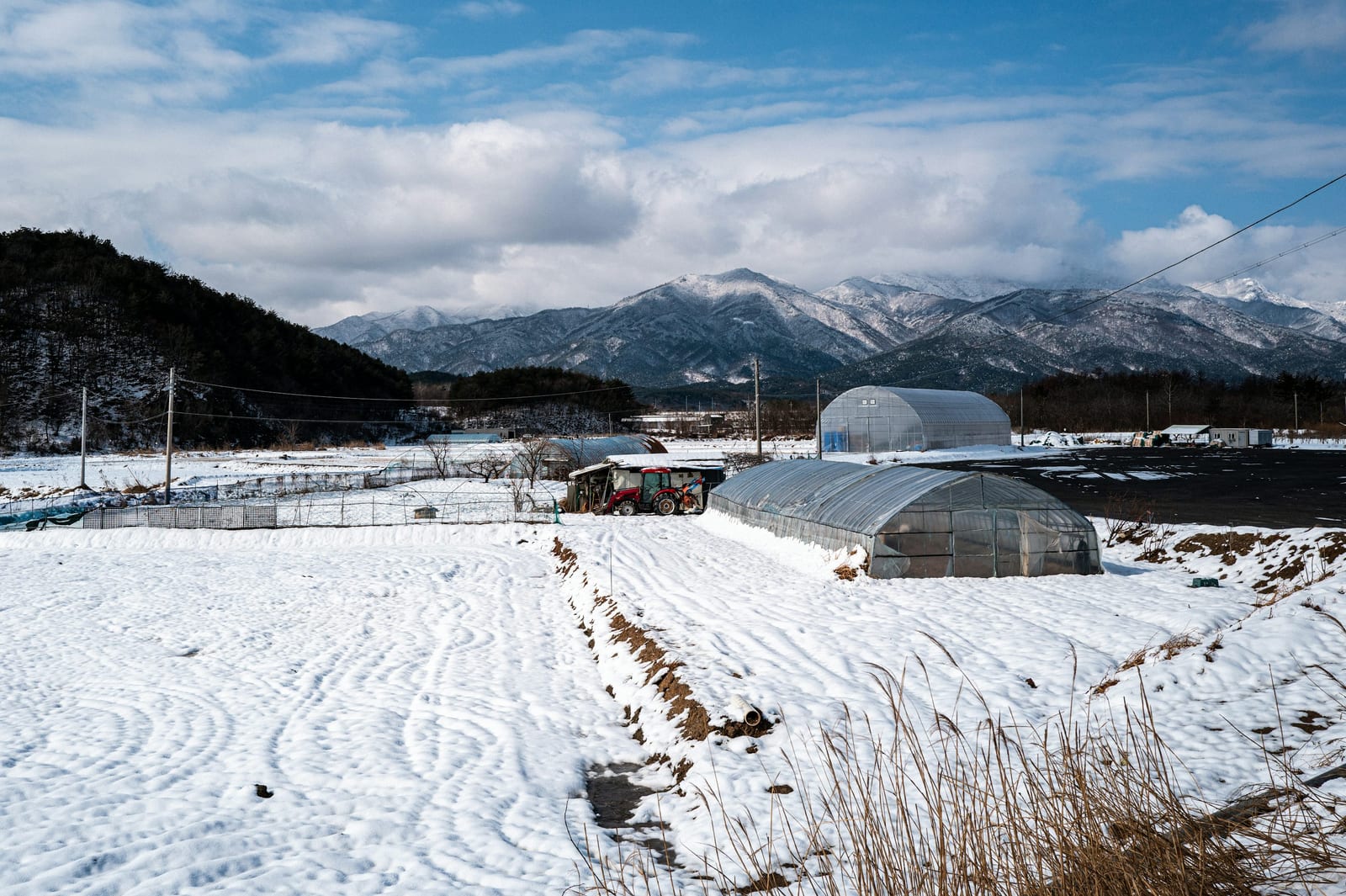
Mache, kale, and spinach can survive temperatures down to 10°F or lower when sheltered from wind and freezing rain inside an unheated greenhouse. The crops that fail in winter are not cold-intolerant: they require active growing temperatures above 40°F. The crops that succeed tolerate dormancy and resume growth during any warm spell.
That distinction drives every practical decision about winter greenhouse growing.
Why some crops make it and others do not
A winter greenhouse does not replicate summer conditions. What it does is remove the factors that kill cold-hardy crops in the open field: wind chill, freezing rain, rapid temperature swings, and prolonged ice formation on leaves. The plants inside are still cold. They are just protected from the stresses that cause tissue damage.
Cold-hardy crops evolved for exactly this situation. Kale and spinach originated in the Mediterranean and northwestern Europe, climates with mild winters and little snow cover. Their leaves contain natural antifreeze compounds, primarily dissolved sugars, that lower the freezing point of plant tissue. When temperatures drop slowly, these crops acclimate by concentrating those compounds. A plant that looks frozen solid on a cold morning often recovers fully by afternoon as temperatures rise above freezing.
Warm-season crops never developed those adaptations. A tomato plant at 35°F will show chilling injury within hours. At 28°F it dies. No amount of row cover changes that biological limit.
The cold-hardy crop list
Eliot Coleman, who has grown vegetables year-round at Four Season Farm in coastal Maine since the 1960s without supplemental heat, has documented roughly 30 crops that survive winter conditions under minimal protection. His full list includes: arugula, beet greens, broccoli raab, carrots, chard, chicory, claytonia, collards, dandelion, endive, escarole, garlic greens, kale, kohlrabi, leeks, lettuce, mache, minutina, mizuna, mustard greens, pak choi, parsley, radicchio, radish, scallions, sorrel, spinach, tatsoi, turnips, and watercress.
Not all of these are equally cold-tolerant. Coleman notes that many of them “can easily survive temperatures down to 10°F or lower,” but this range covers crops with very different cold tolerance levels. A practical grouping:
| Hardiness tier | Crops | Winter behavior |
|---|---|---|
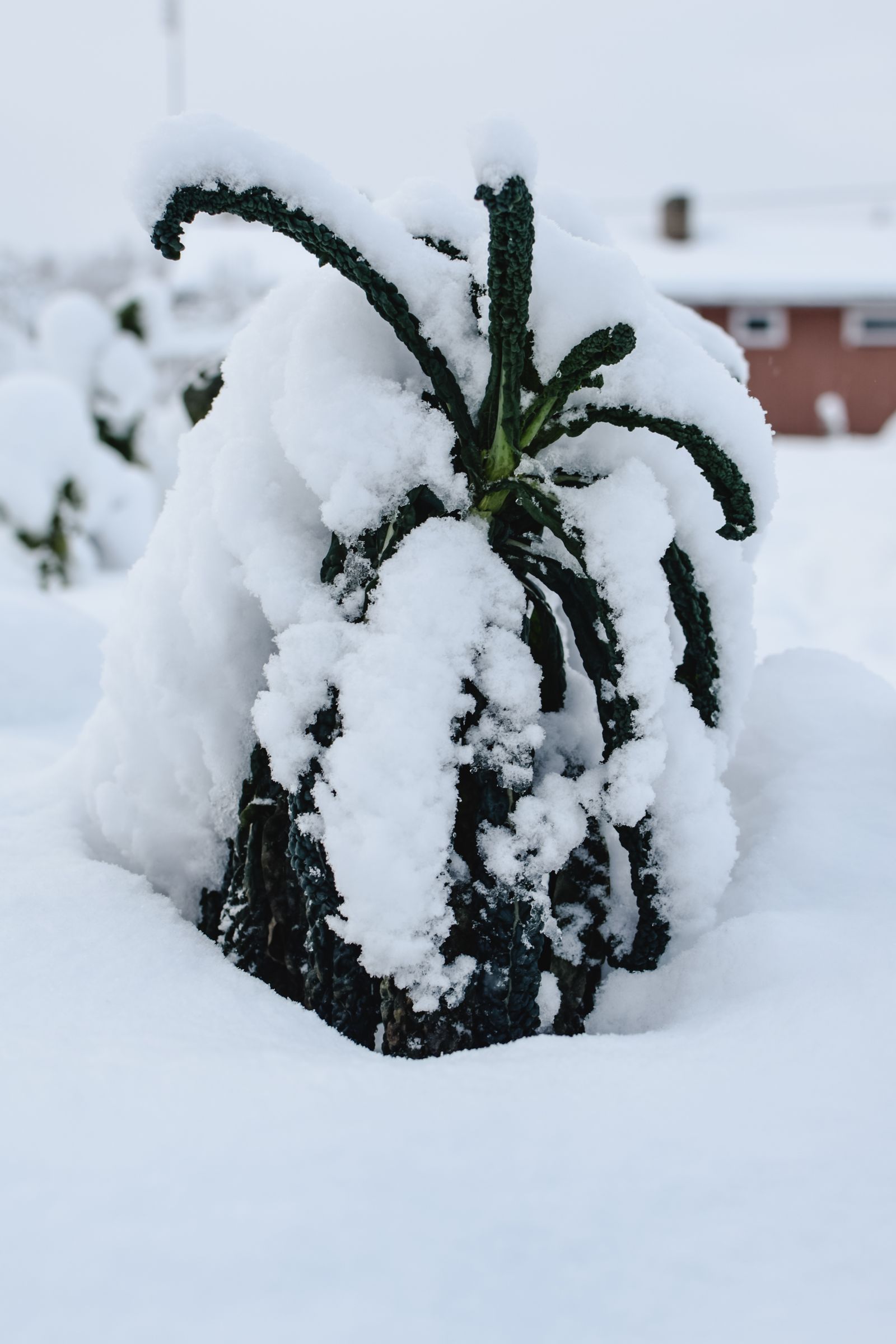
| Very hardy (survive near 10°F and below) | Mache, kale, claytonia, collards | Harvestable after hard freezes; regrow quickly on warm days |
| Hardy (survive to around 15 to 20°F) | Spinach, arugula, scallions, mizuna, tatsoi | Slow growth in cold; recover well between freeze events |
| Semi-hardy (prefer temperatures above 25°F) | Lettuce, chard, radicchio, endive | Tolerate light freezes; benefit from inner row cover on coldest nights |
| Root crops (tops killed, roots store in ground) | Carrots, beets, turnips | Tops killed by hard frost; roots in the ground survive and sweeten; harvest through winter |
Individual variety performance varies within each tier. Winterbor kale handles cold differently than Red Russian kale. Bloomsdale spinach is hardier than many smooth-leaf varieties. The tier groupings describe general relationships, not precise cutoffs.
The Eliot Coleman framework: a twice-tempered climate
Coleman’s system at Four Season Farm uses two nested layers of protection, creating what he calls a twice-tempered climate.
The outer layer is a plastic-covered hoop house or gothic-style greenhouse, unheated. On a cold night this structure alone raises the interior temperature by roughly 10 to 15 degrees Fahrenheit compared to outside. When outdoor temperatures are at 10°F, the greenhouse interior sits around 20 to 25°F.
The inner layer is floating row cover, a lightweight fabric suspended on wire hoops a few inches above the soil surface. A medium-weight cover like Agribon AG-19 floating row cover is the standard choice here, light enough to pass usable light yet heavy enough to hold warmth. This second layer adds another 10 to 15 degrees of protection. The soil itself contributes: it absorbs solar energy through the day and releases it slowly at night, acting as low-level thermal mass.
The combined effect is substantial. Coleman’s measurement: when outdoor temperatures fall to minus 15°F, the temperature under the inner row cover stays around 15 to 18°F above zero. The cold-hardy crops in that protected zone are at their lower temperature limits but not beyond them.
This is the practical case for a quality greenhouse structure. A thin-walled kit with poor seals loses heat faster and provides less temperature lift than a well-built double-wall polycarbonate structure. The greenhouse heating guide covers the thermal math for calculating heat retention, but the key insight for winter growing is that better insulation extends the range of nights where no heating is needed at all.
Succession planting: the timing that makes winter harvests possible
The plants producing a January harvest were not planted in January. Coleman’s system depends on succession planting: sowing cold-hardy crops in late summer and fall so they reach harvestable size before the shortest, darkest days of the year.
General timing for most northern climates:
- Sow mache, claytonia, and spinach outdoors or in an unheated structure: late August through September
- Sow kale, arugula, and mizuna: mid-August through early September
- Transplant lettuce and chard into the greenhouse: September through mid-October
- Direct sow carrots and beets for winter root storage: August
Once day length drops below 10 hours (around November 1 in most of the northern United States), cold-hardy crops stop growing or grow so slowly that new plantings will not size up before the shortest days. The plants sown in August and September are what you harvest from November through February. Growth resumes meaningfully in late February as day length increases past 10 hours again, even while temperatures are still cold.
The greenhouse ventilation guide covers the humidity side of this schedule: cold crops in an unheated winter greenhouse need ventilation even on cold days to prevent fungal disease, particularly when outdoor temperatures warm enough to allow brief ventilation without freezing the plants.
Starting from scratch: what to grow in year one
The shortest path to a winter harvest from a greenhouse you are setting up for the first time:
Mache is the easiest starting point. It is the hardiest crop on Coleman’s list, grows in a tight rosette that stays below 6 inches, and requires almost no attention between sowing and harvest. Direct sow in late August or September, thin to 3 inches apart, and harvest by snipping clusters at the base from November onward. The flavor (mild, nutty, slightly floral) improves as temperatures drop. It will self-sow if a few plants go to seed in spring.
Kale is the next step. Varieties like Siberian or Red Russian handle cold reliably and can be harvested as a cut-and-come-again crop for months. Sow in August, let plants reach 12 to 18 inches before the first hard freeze, and harvest outer leaves throughout winter. Never strip more than one-third of the leaves at once.
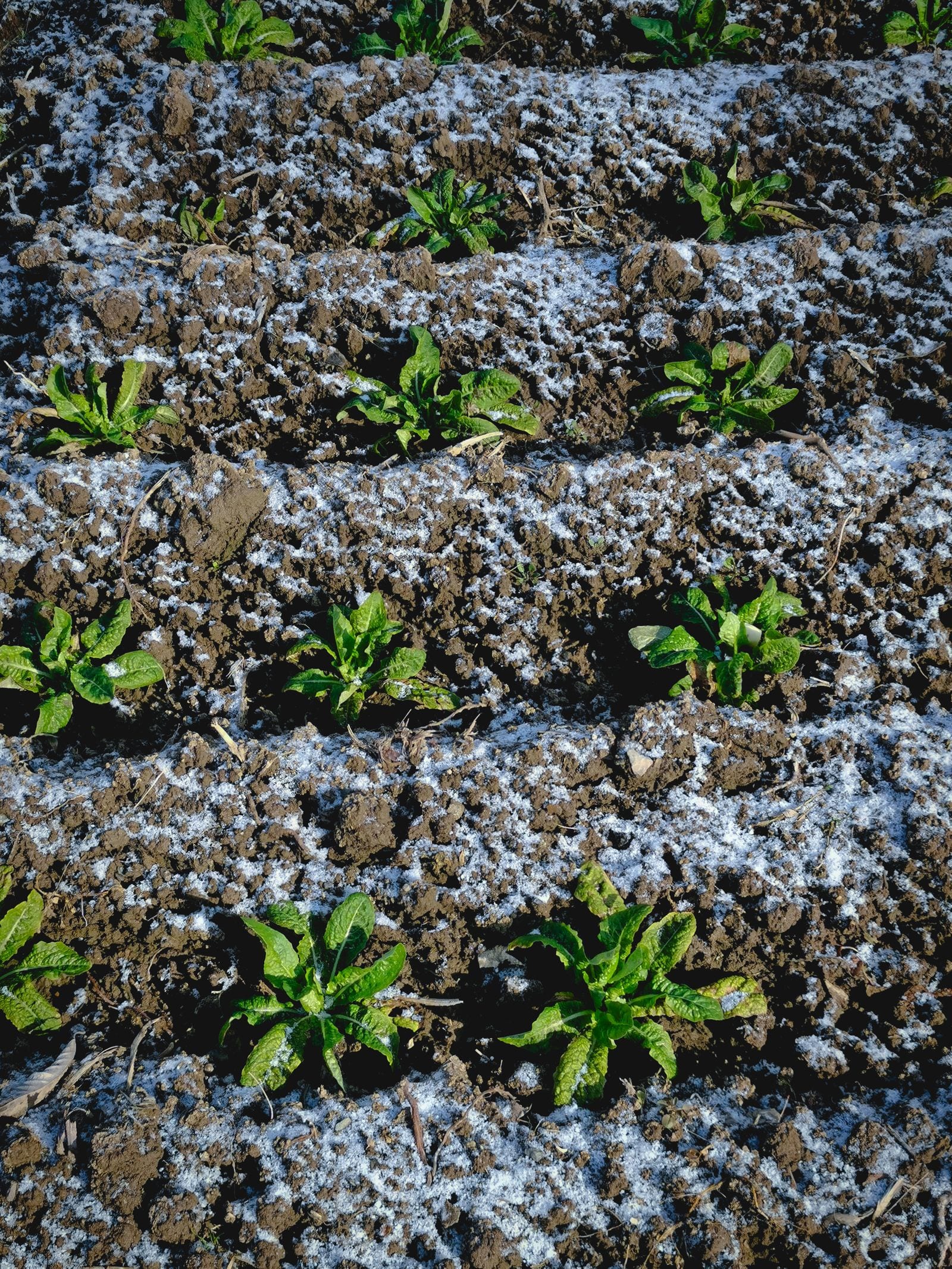
Spinach fills in during mild winter spells. Its optimal growing temperature is around 50 to 60°F, which means it grows actively whenever temperatures stay in that range for several consecutive days. This makes it productive during the mild stretches that mache and kale sit out.
Those three crops cover the hardiness spectrum and give you something harvestable almost any week from November through March in most northern climates.
The Exaco Riga review covers one of the better kit options for serious winter growing: the 8mm twin-wall polycarbonate panels provide meaningful insulation, and the onion-arch design sheds snow without manual clearing. Glazing thickness and frame seal quality directly affect how cold the interior gets on the worst nights, so structure choice matters for this kind of growing. The greenhouse foundation guide covers base options that affect both thermal mass and long-term stability.
Does the greenhouse need any heat at all?
For the hardiest crops, no. Mache, kale, claytonia, and spinach survive a Maine winter in Coleman’s unheated system. The greenhouse electrical guide covers the wiring for adding a heater if you choose to, but heat is a choice about which crops you grow, not a requirement for growing anything.
Supplemental heat becomes worthwhile in three situations:
- You want to grow semi-hardy crops like lettuce or chard continuously through the coldest months rather than in slow-growth dormancy mode
- You want to start seedlings in January or February for early spring transplanting
- Your climate includes multi-day stretches below minus 20°F, which can push even a dual-layer system past the limits of the hardiest crops
In any of those cases, a small wet-rated unit like the Bio Green Palma greenhouse heater on a low setpoint holds the floor above the danger line without trying to make summer indoors.
The economics matter. A small propane or electric heater running overnight adds real cost that may or may not pay back in additional harvests. Many growers find that the unheated approach, stocked with the right crops, produces more food than expected without any operating cost.
The name of this site is a statement of method: frost is not the end of the growing season, it is a threshold to cross with the right crops and the right structure. Mache does not know what month it is. It knows the temperature under its row cover, and at 15°F it is still alive and still growing slowly toward harvest.
Accessories worth buying on day one
A short list of the gear that makes a winter greenhouse easier to run, whether you heat it or not.
- AcuRite indoor/outdoor digital thermometer: a remote-probe min/max thermometer that tells you the real overnight low under the row cover, the one number that decides which crops survive.
- Inkbird ITC-308 temperature controller: a plug-in thermostat that switches a heater on only when the interior drops to your setpoint, so you spend nothing on the many nights the structure holds on its own.
- VIVOSUN seedling heat mat: bottom heat for starting January and February seedlings on a bench without warming the whole greenhouse.
As an Amazon Associate, Defy Frost earns from qualifying purchases.