Field notes Comparisons 11 min
High Tunnel vs Greenhouse Kit: What Each Does Best
High tunnels raise overnight lows 10 to 15°F at the lowest cost per sq ft. Polycarbonate kits hold 45°F in zone 5 with a heater. Two tools, two growing jobs.
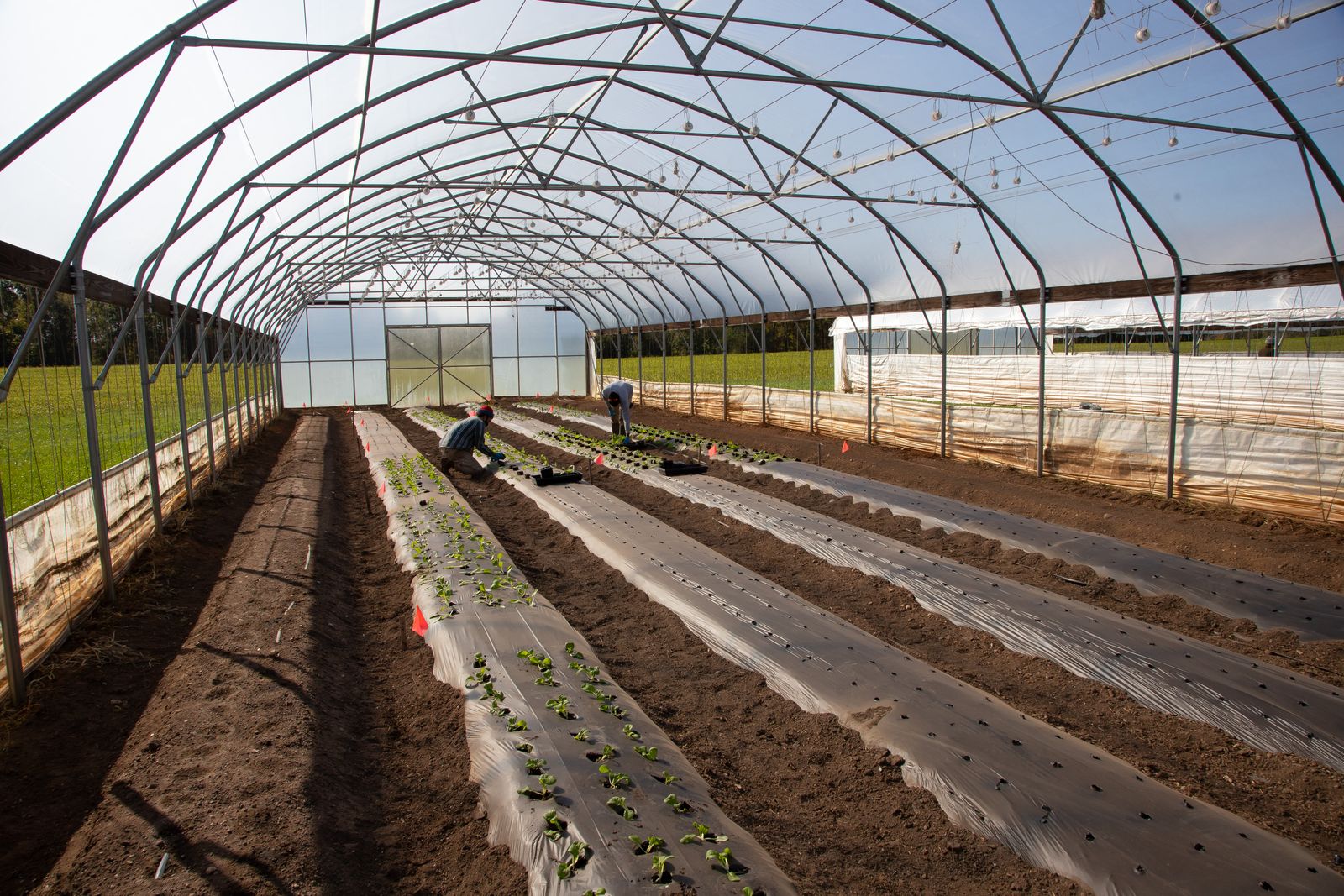
Buy a high tunnel for market-scale season extension at the lowest cost per covered square foot, with NRCS EQIP cost-share available. Buy a polycarbonate kit greenhouse for a small, year-round growing space that holds 45 to 55°F through a zone-5 winter with supplemental heat. These are different tools solving different problems.
A Bootstrap Farmer 14’ Essential Round starts at $1,904 for a 14x20 footprint: 280 square feet of covered growing space at $6.80 per square foot, 16-gauge galvanized steel and 6-mil UV-rated poly included. A Grandio Elite 8x8 polycarbonate kit costs $2,599 for 64 square feet of 10mm twin-wall polycarbonate. Both enter around $2,000 but cover completely different amounts of ground, and deliver completely different growing environments in a cold winter.
What a high tunnel is
A high tunnel is a season extension structure. Galvanized steel hoops anchor in the soil, a ridge pole ties them at the peak, and 6-mil UV-rated poly film pulls over the frame. Roll-up sides vent in summer. In exposed or sandy sites, a set of Ashman auger ground anchors adds holding power at the post bases against wind. The thermal result is simple: a 10 to 15°F temperature lift above outside ambient on a cold night.
If it is 28°F outside, the interior runs 38 to 43°F. Cool-season crops, overwintered kale, spinach, arugula, and root vegetables hold at those temperatures. Transplants that would be killed outside survive inside. The growing season opens three to six weeks earlier in spring and runs three to six weeks later in fall.
What a high tunnel cannot do is hold a fixed temperature setpoint through a zone-5 or zone-4 winter. On a 5°F night, the interior drops to roughly 15 to 20°F. Single-layer poly provides considerably less thermal resistance than multi-wall polycarbonate, and the heating cost to close that gap through a single-layer film is prohibitive for any practical operation.
High tunnels are designed to scale. A market gardener growing CSA boxes across a half-acre does not want eight polycarbonate panels; they want a 14x100 or 20x80 tunnel running the length of a bed system. Bootstrap Farmer’s 14’ Essential kits run from 14x20 to 14x100 and beyond. Growing area per dollar is the metric they optimize, and by that metric nothing else in the category competes.
The Bootstrap Farmer high tunnel review covers the full lineup including the Essential vs All-Metal fork, NRCS eligibility, and assembly notes for both frame types.
What a kit greenhouse is
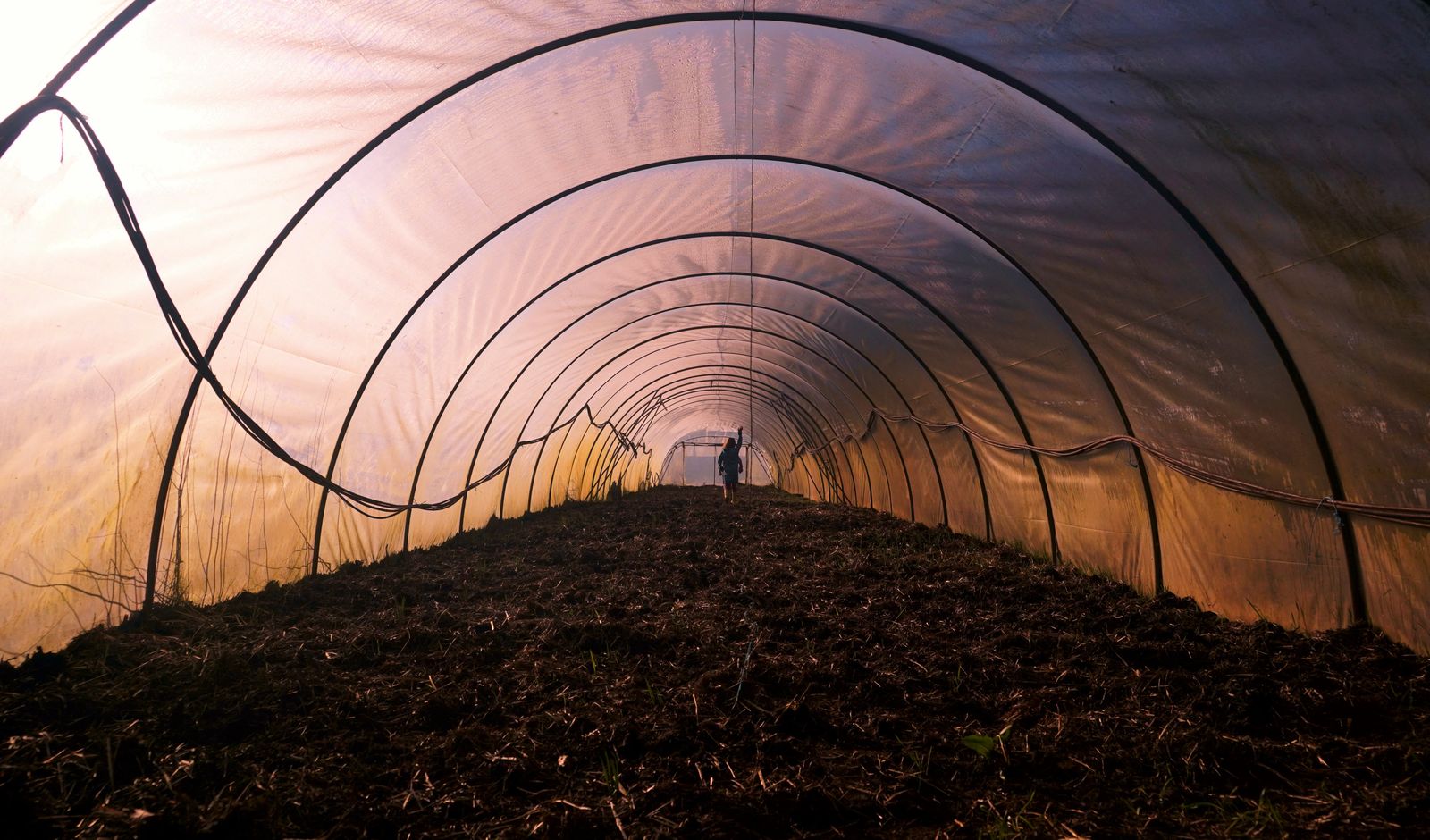
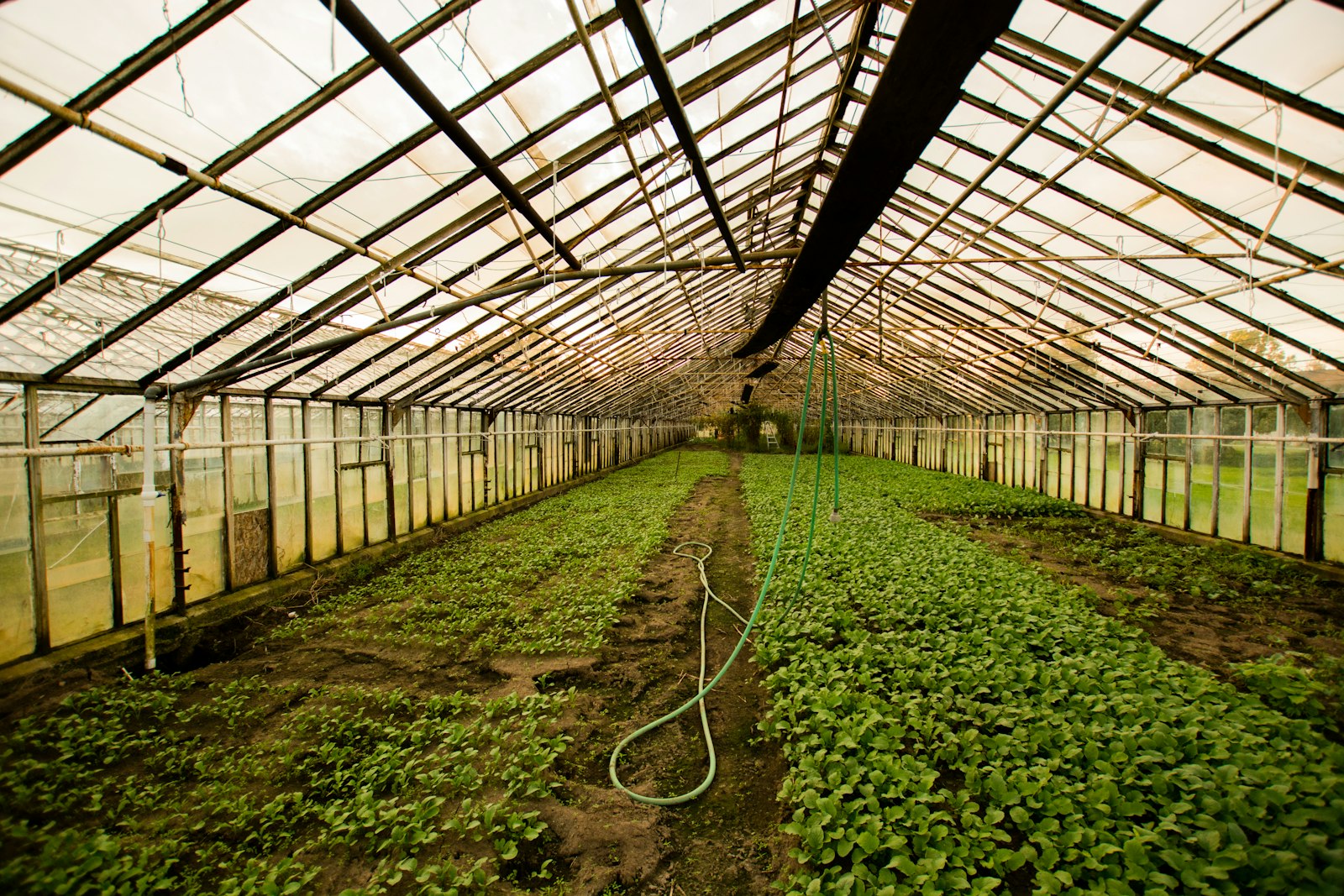
A polycarbonate kit greenhouse is a four-season enclosure. The glazing is multi-wall polycarbonate: 6mm, 8mm, or 10mm panels with an air gap between layers that provides real thermal resistance. The frame is powder-coated aluminum, foundation-anchored, and built to stand permanently. With a supplemental heater sized to the footprint and climate, these structures hold 45 to 55°F through a zone-5 winter night.
The thermal difference compared to poly film is not marginal. A Grandio Elite uses 10mm twin-wall polycarbonate (R-1.9), more than twice the thermal resistance of thinner glazing options. On a 0°F night in zone 5, the polycarbonate greenhouse requires far less heater capacity per square foot to maintain 45°F inside than an equivalent poly structure would. The cheap greenhouse heating guide has the BTU math by glazing type, kit size, and climate zone.
Kit greenhouses are sized for smaller footprints and more demanding winter performance. An 8x8 to 8x24 polycarbonate kit is sized for a backyard grower wintering citrus, overwintering tender perennials, starting seedlings in February, or growing year-round through a serious frost climate. Hobby-tier growing area runs from 64 to 192 square feet, which is the right scale for a kitchen garden. It is not the right scale for covering 2,000 square feet of market beds.
The glazing decision drives everything downstream. The greenhouse plastic guide covers R-values and light transmission for every standard polycarbonate thickness from 4mm through 16mm, with data from manufacturer spec sheets.
Side-by-side comparison
| Feature | High Tunnel | Polycarbonate Kit Greenhouse |
|---|---|---|
| Glazing | Single-layer 6-mil poly film | Multi-wall polycarbonate (6mm to 10mm or more) |
| Overnight temperature lift | +10 to 15°F above ambient | Holds setpoint with heater |
| Entry price | From $768 (10’ wide), $1,904 (14’ wide) | From $1,099 (Grandio Element) |
| Cost per sq ft (kit, uninstalled) | Roughly $4 to $9 | Roughly $20 to $45 |
| Footprint range | 120 sq ft to many thousands | 64 to 250 sq ft at hobby pricing |
| Foundation | Soil-anchored posts, no concrete | Permanent base, poured perimeter recommended |
| Portability | Relocatable or seasonal | Fixed permanent structure |
| Published wind rating | 105 mph (All-Metal); not stated (Essential) | 56 to 76 mph (model-dependent) |
| Published snow load | Not published | 15 to 25 lb/ft2 (model-dependent) |
| Winter growing (Zone 5) | Season extension only | Year-round with supplemental heat |
| NRCS EQIP eligible | Yes | No |
| Glazing lifespan | 4-year UV warranty (replaceable poly) | 5 to 15 years (manufacturer-dependent) |
Cost per square foot
The cost gap between high tunnels and polycarbonate kits is large and gets larger as footprint grows.
Bootstrap Farmer’s 14’ Essential Round starts at $1,904 for a 14x20: 280 square feet at $6.80 per square foot. The 20’ Essential starts at $2,240 for a 20x20: 400 square feet at $5.60 per square foot. Both prices include the galvanized steel hoops, ridge pole, ground posts, hardware, and 6-mil poly with a 4-year UV rating. Local 2x6 lumber for the baseboards adds roughly $60 to $120 depending on your market.
A Grandio Elite 8x8 delivers 64 square feet of 10mm twin-wall polycarbonate space for $2,599: $40.60 per square foot. The steel base kit, double sliding doors, rain gutters, and snow load kit are included at that price.
The Exaco Riga 5 delivers 165 square feet of premium arch-profile twin-wall polycarbonate for $9,199: $55.75 per square foot.
For a grower who needs 1,400 square feet of covered growing space, only one of these categories scales there. A Bootstrap Farmer 14x100 high tunnel delivers that area. A polycarbonate kit covering 1,400 square feet requires multiple premium units and a total cost an order of magnitude higher.
Season extension vs year-round growing
The core decision point is not which structure is better. It is what growing objective you actually have.
A high tunnel raises the overnight low inside by 10 to 15°F. On a 28°F night, the interior runs 38 to 43°F. Cool-season crops, lettuce, spinach, arugula, overwintered kale, and root vegetables can hold at those temperatures. The season opens three to six weeks earlier in spring and runs three to six weeks later in fall. That is six to twelve weeks of additional production across the year.
What a high tunnel cannot do is hold any minimum temperature setpoint through a zone-5 or zone-4 winter night. On a 5°F night, the interior drops to 15 to 20°F. No practical crop survives there. Heating a large single-layer poly structure to 45°F on a 5°F night is technically possible but economically pointless: the heat loss through single-layer film is roughly continuous. A correctly sized supplemental heater on a 14x40 high tunnel in that scenario would run constantly and still struggle to hold the target.
A polycarbonate kit greenhouse with a supplemental heater holds 45 to 55°F through a zone-5 winter night. The Grandio Elite’s 10mm twin-wall (R-1.9) cuts heating demand compared to thinner options. At 45°F inside on a 5°F night, a 64-square-foot Grandio Elite 8x8 requires roughly 3,500 to 4,200 BTU per hour: the output of a small propane heater running intermittently, or a sealed electric unit like the Bio Green Palma greenhouse heater on a thermostat. Citrus, tender perennials, orchids, and seedling starts in February are all viable in that environment.
Scale: market growers vs backyard growers
High tunnels make economic sense at market scale. They do not serve a backyard grower whose goal is year-round growing in a serious frost climate.
A market gardener running a half-acre CSA operation needs 2,000 to 5,000 square feet of covered growing space to justify the build. Only a high tunnel reaches that scale at affordable cost. A farm with NRCS EQIP cost-share available is choosing the wrong structure if they buy polycarbonate kits to cover market beds.
A backyard grower on a residential lot wants 64 to 200 square feet of greenhouse space, year-round growing capability, and a structure that sits on a foundation and does not move. The right tool is a polycarbonate kit greenhouse. The Grandio Elite review covers the 25 lb/ft2 snow, 76 mph wind, lifetime frame warranty option. The Exaco Riga review covers the premium arch design rated to 20-plus lb/ft2 and 120-plus mph. The Palram Canopia Hybrid review covers the entry-level 15 lb/ft2 option available through major retailers.
There is no footprint or climate where the same buyer solves both problems equally well with a single structure. They optimize for different objectives.
NRCS cost-share: what it means in practice
USDA NRCS provides cost-share assistance for high tunnels through the Environmental Quality Incentives Program, Practice Code 325, High Tunnel System. Bootstrap Farmer notes NRCS eligibility on their Essential Round product pages: their kits meet USDA structural standards for the program.
This assistance is not available for polycarbonate kit greenhouses. The NRCS High Tunnel System practice standard covers season extension structures in agricultural production contexts. A residential backyard greenhouse kit does not qualify.
For an eligible farm operation, EQIP cost-share can offset a significant share of the structure and installation cost. Funding cycles open at the county level. Applications are competitive and awards vary by state and year.
To apply: contact your local USDA Service Center or the NRCS state office directly. Get a written determination before committing to a structure, not after. But for any farm with existing USDA relationships, the program is worth a conversation before the first purchase order goes in.
Zone-by-zone verdict
Zone 7 and warmer, any scale: A high tunnel is almost always the right call for season extension at scale. Overnight lows in zone 7 rarely challenge single-layer poly beyond what it was designed to handle. NRCS EQIP makes the economics even stronger for eligible agricultural operations.
Zone 6: A high tunnel extends shoulder seasons well. If the goal is genuine winter growing at any setpoint above freezing, the high tunnel falls short once real cold arrives. A polycarbonate kit greenhouse with a small heater handles zone-6 winters more reliably at the hobby scale.
Zone 5, year-round growing required: A polycarbonate kit greenhouse with a correctly sized heater is the right tool. The snow and wind load guide covers how to verify a kit’s structural ratings against your county’s ground snow load before committing. The greenhouse foundation guide covers foundation prep for permanent installation in frost-heave climates.
Zone 4 and colder: A well-rated polycarbonate kit with verified snow ratings and an adequate heater. The Exaco Riga XL at 30 lb/ft2 and the Grandio Elite at 25 lb/ft2 both have the structural margin for serious cold-climate winters.
Market scale, any zone: A high tunnel. No polycarbonate kit greenhouse delivers 2,000 square feet of covered growing space at anything close to the cost per square foot of a market-scale high tunnel.
The bottom line
These are not two versions of the same tool. They are built for different growing objectives, different scales, and different climates.
Buy a high tunnel if you are a market grower who needs large-area season extension at the lowest cost per covered square foot. Pursue NRCS EQIP cost-share if your operation qualifies. Accept that the structure raises overnight lows by 10 to 15°F and does not hold fixed setpoints through a zone-5 winter.
Buy a polycarbonate kit greenhouse if you need a small, permanent, year-round growing space that holds 45 to 55°F in a serious frost climate. Pay more per square foot for the polycarbonate glazing and expect to size a supplemental heater to the footprint and climate zone.
The Bootstrap Farmer high tunnel review covers the full high tunnel lineup. The Grandio Elite review, Exaco Riga review, and Palram Canopia Hybrid review cover polycarbonate kit options at three different price and specification points. Both tools have a place in a serious growing operation. The question is which problem you are actually trying to solve.
Accessories worth buying on day one
Whichever structure you land on, these few items earn their place in either a tunnel or a kit.
- AcuRite indoor/outdoor digital thermometer: a remote probe shows the real overnight low inside, which tells you whether the structure is doing the job you bought it for.
- Agribon AG-19 floating row cover: a layer of frost cloth over the beds adds a few degrees inside a high tunnel on the nights single-layer poly cannot hold.
- VIVOSUN AeroWave clip-on fan: moving air evens out temperatures and cuts the mildew that stagnant corners breed in either structure.
As an Amazon Associate, Defy Frost earns from qualifying purchases.