Field test Reviews 10 min
Exaco Riga Greenhouse Review: The Snow-Country Kit
What Exaco Riga owners actually report: German onion-arch kits from $5,095 to $23,000, the 8mm twin-wall snow story, and price per square foot.

The Exaco Riga is the greenhouse you buy when frost is the enemy and you have between $5,000 and $23,000 to spend on winning. It is a German onion-arch kit, made by Hoklartherm, glazed in 8mm and 10mm twin-wall polycarbonate on the smaller models and 16mm triple-wall on the XL, framed in 13-gauge aluminum that owners describe surviving 100-mph wind and years of snow load. Costco buyers rate it 4.5 out of 5. The honest catch: assembly is a two-person, full-weekend job with instructions translated badly from German, and the price per square foot ranges from a steep $96 on the smallest model to a more reasonable $56 on the mid-size Riga 4 and 5.
That price spread is the single most useful number in this review, and almost nobody publishes it. The Riga 2s costs more per square foot than the Riga XL 9 does. If you understand why, you will buy the right model the first time.
Who actually buys a $5,000-plus greenhouse?
Not the person growing tomatoes in July. The Riga buyer is a four-season grower in a real winter, USDA zone 6 and colder, who wants to be picking greens in February while the neighbors’ raised beds are under a foot of snow. This is a person who has already killed a cheap aluminum kit. They watched a $400 Amazon greenhouse rack out of square in the first windstorm and pop a polycarbonate panel into the yard, and they decided the next one would be the last one.
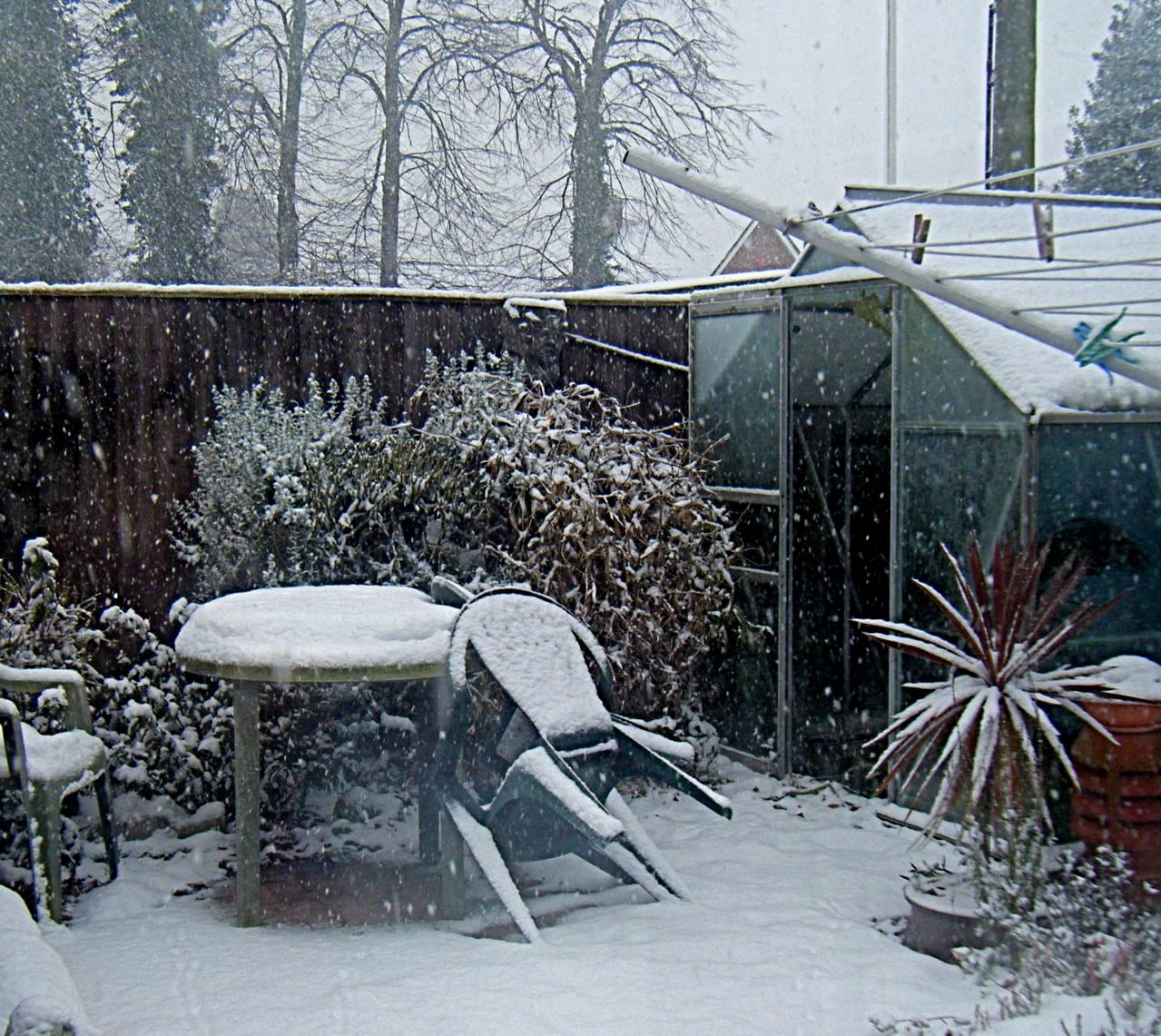
The Riga answers that with mass and geometry. The curved sidewalls are not a styling choice. A flat or steeply gabled roof collects snow until the load cracks something; the Riga’s arch lets it slide. Exaco’s own framing is blunt about the target: it markets the Riga as a greenhouse for snow and wind, engineered, in their words, “to withstand 120+ mph winds” and a “20+ lb snow load,” with the XL rated up to 30 pounds (Exaco, “Best Greenhouse for Snow and Wind,” verified June 2026). Twin-wall polycarbonate does the thermal half of the job. Two layers of plastic with an air gap between them insulate far better than single-pane glass, which is why the Riga holds overnight warmth that a glass conservatory bleeds straight into the dark.
The Riga family, with the number nobody computes
Here is the full current lineup, verified on Exaco’s own product pages and authorized retailers in June 2026, with the price-per-square-foot column added. That last column is the number to buy by.
| Model | Footprint (W × L) | Floor area | Glazing | Doors / vents | Price | Price per sq ft |
|---|---|---|---|---|---|---|
| Riga 2s | 7’8” × 7’ | 54 sq ft | 8mm side / 10mm ends, twin-wall | 1 barn door (2’6” × 6’), 1 auto vent | ~$5,095 | $96 |
| Riga 3s | 7’8” × 10’6” | 81 sq ft | 8mm / 10mm twin-wall | 1 barn door, auto vents | ~$5,700 | $70 |
| Riga 3 | 10’6” × 9’8” | 102 sq ft | 8mm / 10mm twin-wall | 1 barn door, 1 auto vent | $6,899 | $68 |
| Riga 4 | 14’ × 9’8” | 135 sq ft | 8mm / 10mm twin-wall | 1 barn door, 2 auto vents | $8,099 | $60 |
| Riga 5 | 17’6” × 9’8” | 165 sq ft | 8mm / 10mm twin-wall | 1 barn door, 4 auto vents | $9,199 | $56 |
| Riga XL 5 | 14’ × 16’5” | 231 sq ft | 16mm triple-wall | 2 barn doors (37.5” × 74”), 4 auto vents | $17,250 | $75 |
| Riga XL 9 | 14’ × 29’6” | 413 sq ft | 16mm triple-wall | 2 barn doors, 6-8 auto vents | $22,999 | $56 |
Read the right-hand column and the buying logic falls out. The 54-square-foot Riga 2s is the most expensive greenhouse in the line per usable foot, by a wide margin, because the fixed cost of doors, vents, gable ends, and shipping a freight crate from Germany gets spread across the least floor. The cost curve bottoms out in the middle. The Riga 4 and Riga 5 land near $56 to $60 per square foot, the value heart of the line. Then the XL climbs back up, because you are paying for the 16mm triple-wall glazing and a frame engineered for a 14-foot span.
So the small-footprint shopper faces an awkward truth. If your budget caps at $5,500 and you were eyeing the 2s, the 3s gives you 50% more growing space for roughly $600 more, and the per-foot cost drops from $96 to $70. Buy by the square foot, not by the sticker.
What owners say after the crate shows up
The reviews that matter are the verified-purchase ones on the retailers who actually ship these: Costco, Home Depot, and Walmart. Costco lists the Exaco Riga Professional at 4.5 out of 5 stars across 27 reviews and the Riga XL Professional at 4.5 across 21 reviews (Costco, verified June 2026). Home Depot and Walmart carry their own verified-owner review pages for the 2s, Riga 5, XL, and the IIIs. Across all of them, the same themes repeat with almost monotonous consistency.
Assembly is a weekend, not an afternoon. One Costco owner’s account is representative: “It took my husband and I two days to build.” Another describes a team of three capable adults finishing in just over a day with both the video and the written instructions open. Nobody reports a one-person, one-afternoon build. If a listing or a forum post tells you otherwise, distrust it.
The instructions are German-engineered and English-challenged. This is the most-cited complaint, and it is real. One reviewer flatly said the written sheets read as if run “by Google Translate into English.” Exaco’s fix is video: a 3D animated assembly walkthrough that owners who used it found far better than the paper. The recurring warning is that the steps are order-dependent, so missing one early can mean disassembling back to it. Read the manual twice, watch the video first, and lay out every labeled part before you pick up a wrench.
Snow performance is the part that delivers. This is where the owner reports turn from grumbling to loyalty. “The snow slides off the roof,” several note. One owner’s greenhouse came through 100-mph winds intact. The curved-wall, snow-shedding promise is the one claim owners back up without an asterisk. People who bought a Riga because it “seemed to hold up well in the snow” report that it did.
The hardware quality reads as premium. “It was obvious from the start that this greenhouse is made with quality in mind,” one buyer wrote. “The structure is sturdy and all of the materials and accessory pieces are top notch.” That sentiment, paired with praise for Exaco’s customer service, runs through the high-star reviews. The aluminum is heavy, the seals are real rubber, and the kit does not rattle in wind the way a budget greenhouse does.
What owners wish they’d known
No kit is perfect, and a review that only counts the praise is an ad. The counted complaints, in rough order of frequency:
The instructions, again. It is worth saying twice because it is the number-one frustration. Budget patience, not just a weekend.
Foundation surprises. Owners who skipped a properly leveled, square base paid for it during assembly, when panels and doors that are manufactured true would not seat on a base that wasn’t. Exaco itself is explicit that the greenhouse “is manufactured true and square and must be installed this way.” More than one owner learned that the hard way after the crate arrived. Get the base right before the kit shows up. Our greenhouse foundation guide walks the base-by-base decision, and it is a genuine prerequisite for this purchase, not an upsell.
The load ratings are stated, not stamped. Exaco gives manufacturer figures (120-plus mph wind, 20 to 30 pounds of snow) but is upfront that it does not provide the engineer-stamped, state-specific letter many building departments want for a permit. In its own words: “We have general structural certifications. However, if you are applying for a permit you may need a letter stamped by an engineer certified by your state. We do not provide these.” If your jurisdiction needs that letter, factor in the cost of a local engineer. Our greenhouse foundation guide covers the permit-threshold reality.
A note on glazing claims. Some retailer listings describe the standard Riga 5 as “triple-wall” or rate it at a flat “120 mph.” Exaco’s own pages are clearer and more conservative: the standard Riga (2s through 5) is 8mm and 10mm twin-wall, and only the XL is 16mm triple-wall. When a third-party listing and the manufacturer disagree, trust the manufacturer. We did.

Foundation, ventilation, and the accessories that earn their keep
Exaco’s foundation guidance is refreshingly anti-dogma. They recommend against a full concrete slab, noting that “cement foundations hold a lot of heat in the summer and a lot of cold in the winter.” Their preferred path is an optional C-frame base set into a shallow 5-inch trench and backfilled, which anchors the whole structure without a pour. The kit can also sit on treated lumber, though Exaco warns to put a barrier between treated wood and the aluminum because the wood-preservative chemicals can react with the metal. Pavers or a concrete perimeter work for maximum stability. The full base-by-base breakdown lives in our greenhouse foundation guide.
Ventilation comes built in. Every Riga ships with automatic roof vents driven by wax-cylinder openers, the small piston that expands when the air heats and pushes the vent open with no electricity, then closes it as things cool. The Riga 5 has four; the 2s has one. If you ever add a manually framed vent, or want a backup opener, the Bayliss MK7 Autovent is the wax-cylinder standard, set to start opening around 55°F. The one accessory every Riga owner should buy on day one is a min/max thermometer so you actually know how cold the greenhouse gets overnight before you trust it with seedlings; an AcuRite indoor/outdoor digital thermometer with a 10-foot remote probe does the job.
As an Amazon Associate, Defy Frost earns from qualifying purchases.
Buy the high tunnel instead if…
The Riga is the right answer for a specific buyer and the wrong one for several others.
If you are a market gardener who needs growing space per dollar more than a 30-year structure, a Riga’s per-foot price will sting. A Bootstrap Farmer high tunnel gives you several times the floor for the money, at the cost of less insulation and a film cover you replace every few years. Different tool, different job.
If you want a true glass garden room and aesthetics rank above raw winter performance, look at the Janssens Royal Victorian, the Belgian glass conservatory Exaco also imports. It is gorgeous and it is a worse insulator than twin-wall poly. Know which you are buying.
If you’re cross-shopping the Riga against the glass Janssens specifically, we put the two head-to-head in Riga vs Janssens Royal Victorian, down to price per square foot and overnight heat retention.
But if you are a serious grower in snow country, and you want a kit that sheds the load, holds the heat, and is still standing after a decade of winters, the Riga earns its price. Buy the Riga 4 or 5 for the value floor, get the base dead level before the freight truck arrives, and plan to lose a weekend to a German instruction manual. The greenhouse will outlast the manual, the windstorm, and probably the warranty.
Accessories worth buying on day one
The Riga ships with the structure and the auto vents, so the day-one list is about heat and propagation, the jobs a four-season kit actually exists to do.
- Bio Green Palma greenhouse heater: twin-wall poly holds heat well, but a zone-5 January night still needs a real heater to keep the inside above freezing.
- Inkbird ITC-308 temperature controller: wire the heater through this thermostat so it fires only when the temperature drops to your setpoint, which keeps the power bill sane.
- VIVOSUN seedling heat mat: bottom heat under the seed trays germinates cool-season starts weeks earlier, which is the whole point of buying a snow-country greenhouse.